01 Independent research 2025–Present
Can Gut Bacteria Change the Brain?
Independent gut–brain axis & probiotic research
Whether biological changes linked to alcohol and caffeine exposure can be used to identify gut microbes worth testing as possible modulators of the gut–brain axis — worked out through metabolomic comparison, a computational ranking pipeline, and now preliminary proof-of-concept work back at the bench.
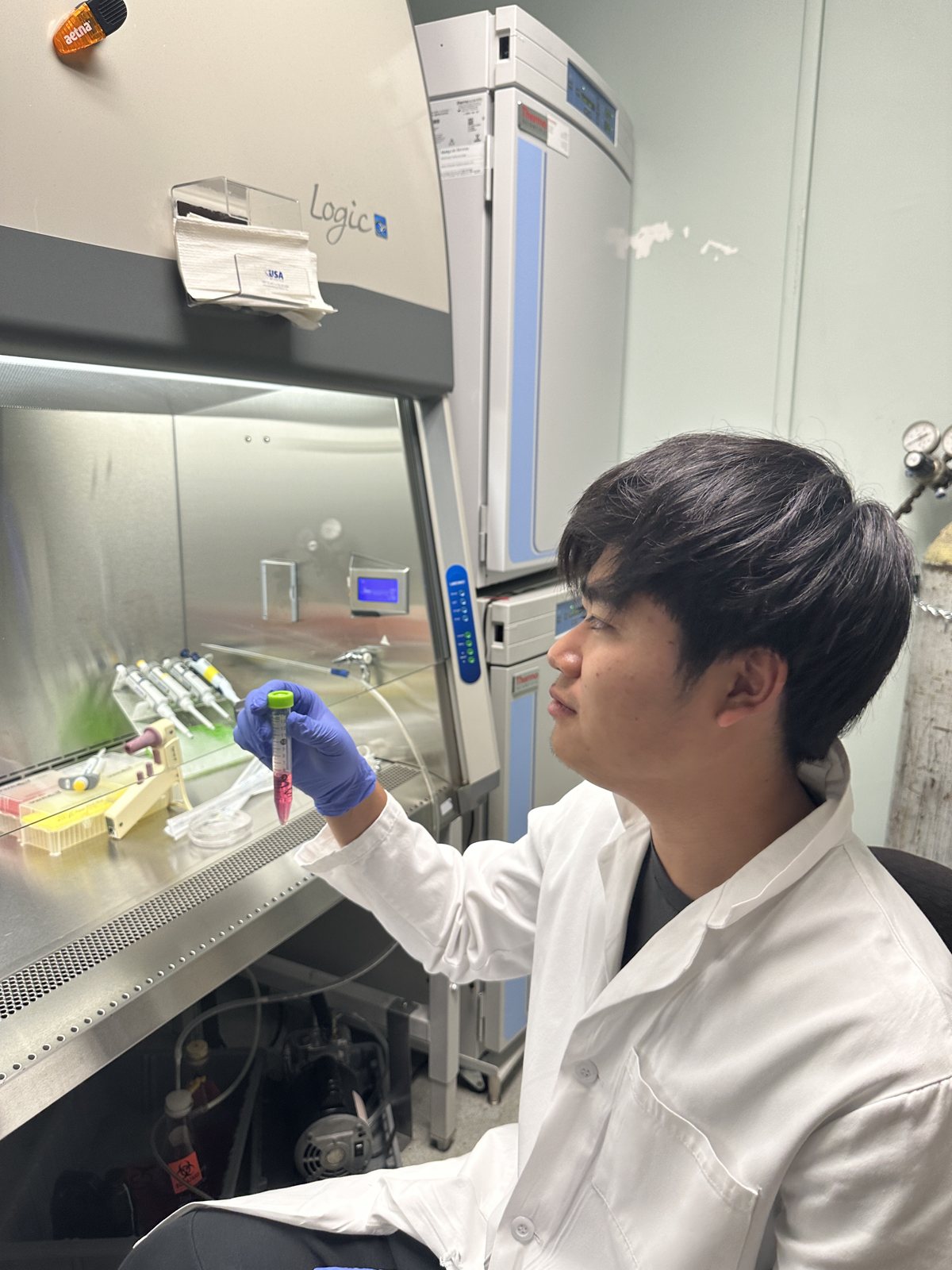
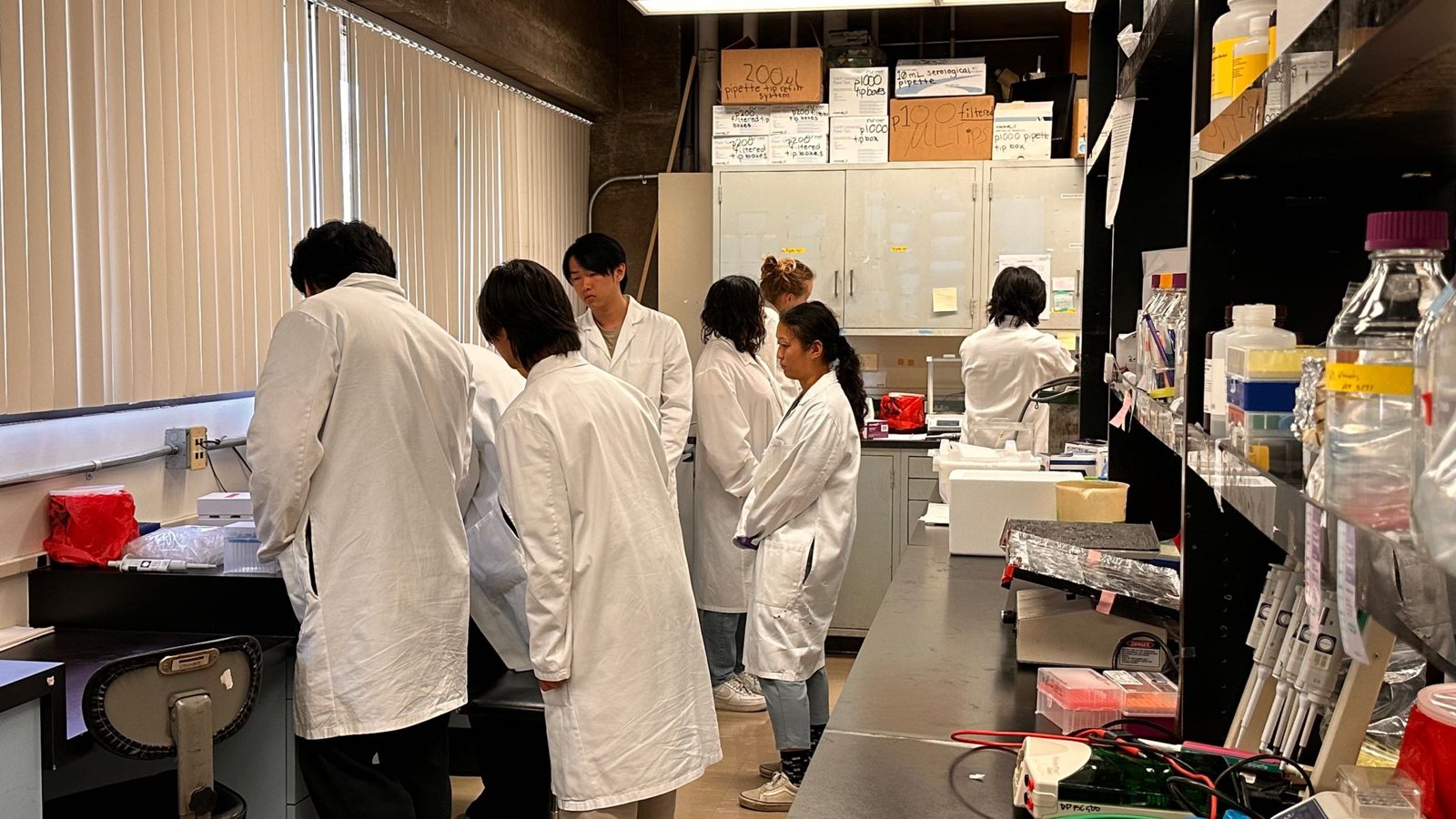
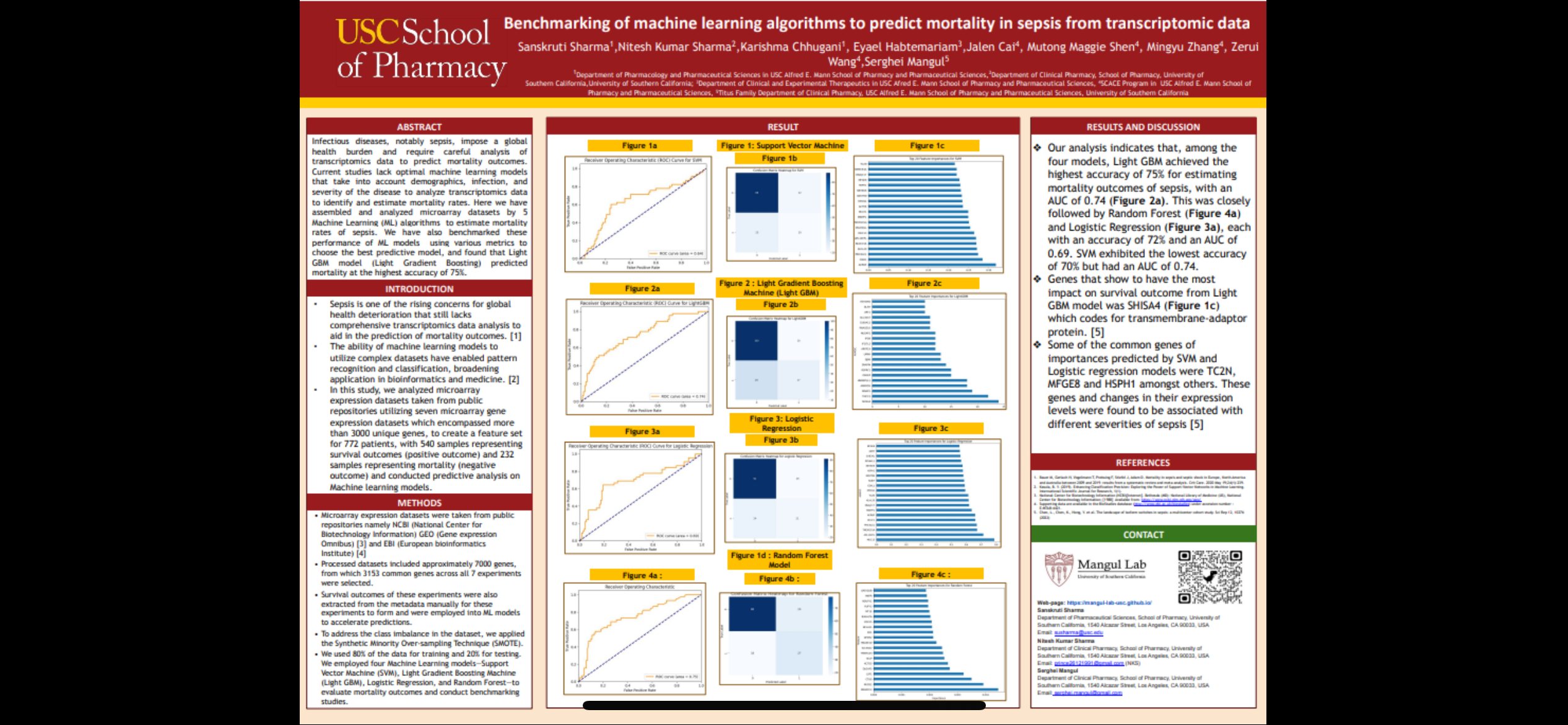
- The wider USC research thread — where the wet-lab habits came from
Chapters & milestones
- 2025
Teaching an AI to Search for Probiotics
A long list of possible probiotic species is not useful without a principled way to decide which ones deserve experimental attention first. This chapter is about building that filter.
Chapter- Add a pipeline diagram or screenshot
- 2026
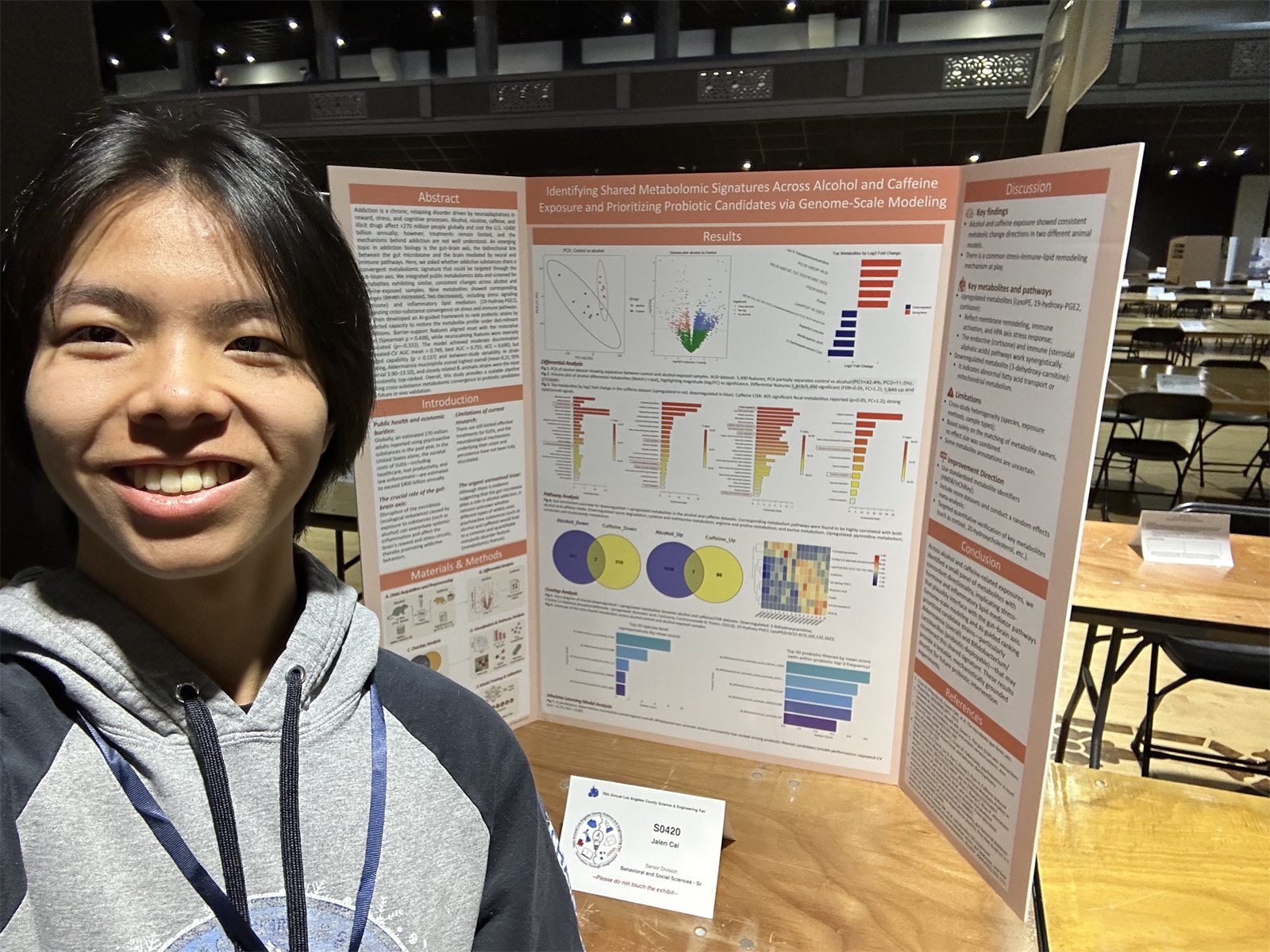
Taking the Gut-Brain Project to the LA County Science Fair
The project's first public outing: presenting the metabolomics and candidate-ranking work at the 2026 Los Angeles County Science & Engineering Fair.
★ Honorable Mention — Los Angeles County Science & Engineering FairChapter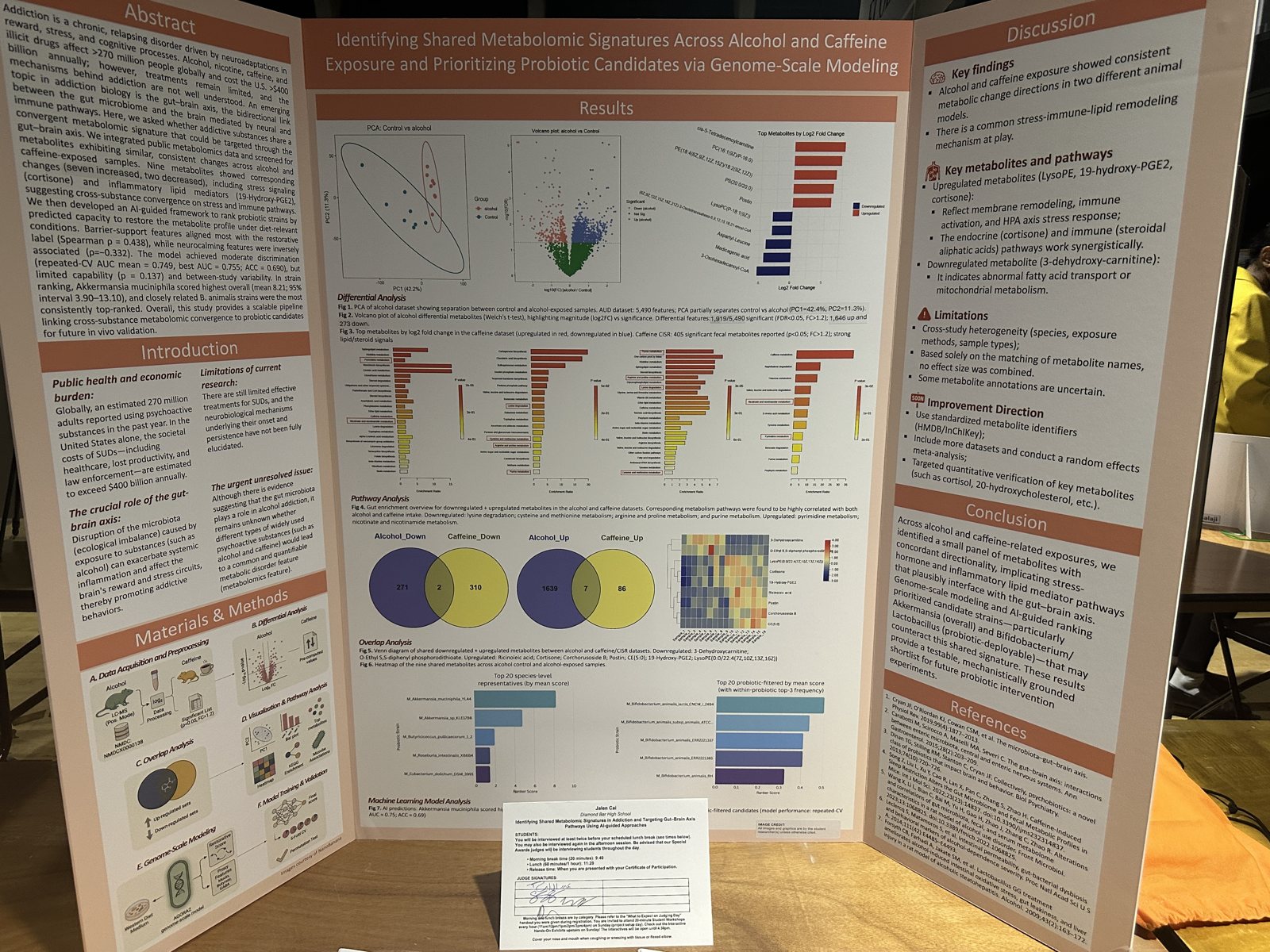
Set up and waiting for judges 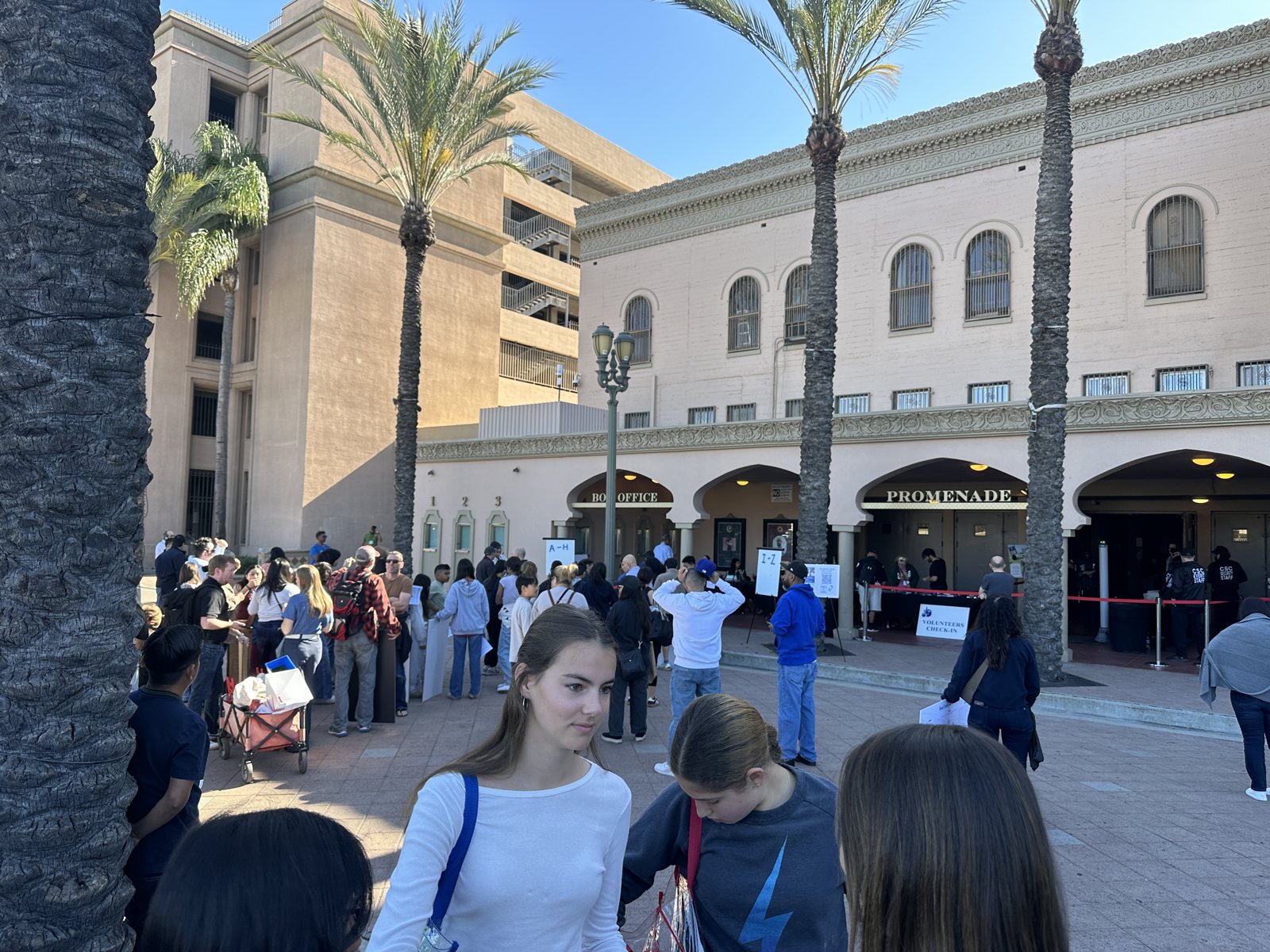
The check-in line outside the venue 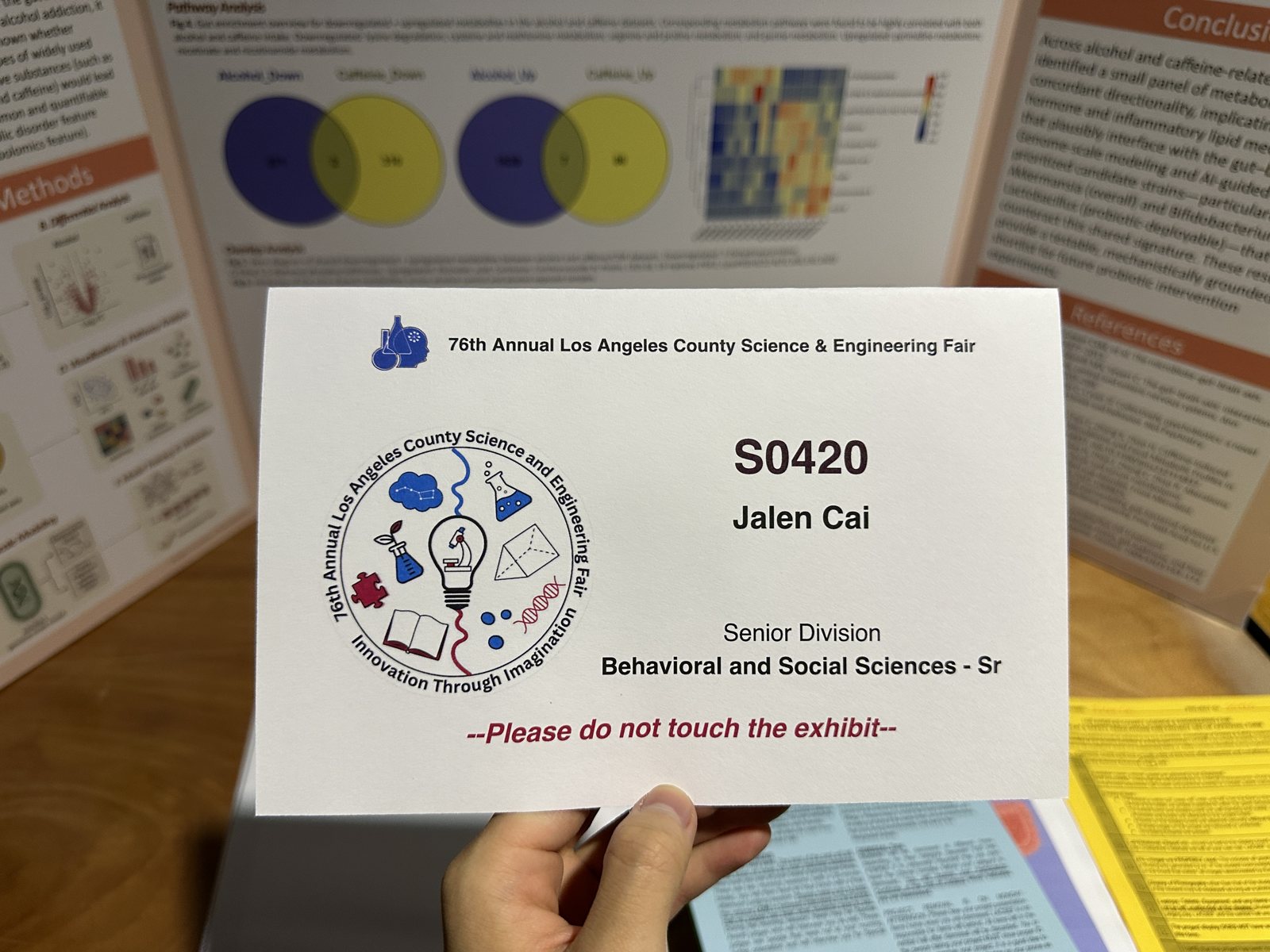
Board S0420, Senior Division 
The boba break afterwards - 2026
We've Come Full Circle: From Computer Predictions to the Wet Lab
The loop reached the bench. Lactiplantibacillus plantarum HMPM2111 was evaluated in a caffeine-exposure mouse model. It is a different strain from ATCC 14917, which led the secondary model's probiotic-deployable ranking. The analysis is still open.
Chapter- Add approved validation figure(s) once the analysis is final
- 2026
Writing It Up: Shared Signatures, Ranked Candidates
The metabolomic comparison, the ranking pipeline and the validation work pulled into one draft, "Shared Metabolomic Signatures Across Alcohol and Caffeine-Related Exposures and Probiotic Prioritization via Genome-Scale Modeling". The manuscript draft dated September 20, 2026 is available as an author manuscript prepared for BLSME 2027.
Manuscript - September 2026
Accepted to BLSME 2027
The paper (manuscript no. BLSME-6239) passed peer review and was accepted on September 25, 2026 to the 6th International Conference on Biotechnology, Life Science and Medical Engineering, held January 30–31, 2027 in Jeju, South Korea. Accepted papers are slated for the conference proceedings in Highlights in Science, Engineering and Technology (Darcy & Roy Press); it has not been published yet.
Accepted paper- Add the proceedings DOI and link once the paper is published